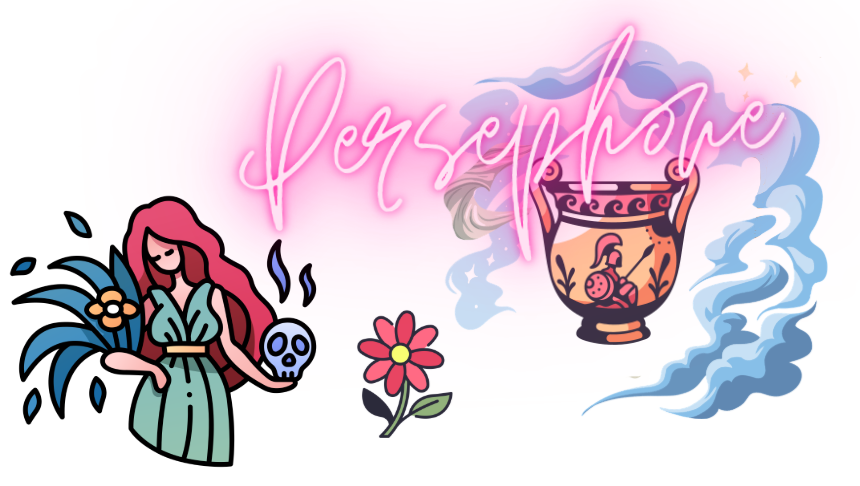
Parents: Zeus and Demeter
Story: Persephone was the goddess of spring and the queen of the Underworld. While gathering flowers in a meadow, Hades burst through the earth in his golden chariot and carried her to his kingdom below. Her mother Demeter searched the earth in despair, and in her grief, all crops withered and died. Zeus eventually ordered Hades to return Persephone, but because she had eaten six pomegranate seeds in the Underworld, she was bound to spend six months of each year with Hades. Her return to the surface each spring brings life back to the world, and her descent each autumn brings winter.
Queen of the Underworld: Although Persephone was taken against her will, she grew into a powerful and respected queen of the Underworld. She was not merely Hades's wife — she was a ruler in her own right, and even the dead feared her. She showed mercy to some heroes who ventured into the Underworld, allowing Orpheus to attempt to bring back his wife Eurydice, and she was moved by his music. But she could also be stern and unforgiving. When Pirithous tried to kidnap her from the Underworld, she helped trap him in the Chair of Forgetfulness, where he remained stuck for eternity.
The Pomegranate Seeds: The pomegranate seeds that Persephone ate in the Underworld became one of the most important symbols in Greek mythology. Whether she ate them willingly or was tricked varies by the telling. Some say Hades offered them knowing that anyone who ate food in the Underworld could never fully leave. Others say Persephone ate them by choice, having grown to care for Hades and her role as queen. Either way, the six seeds bound her to spend six months below and six months above — creating the eternal cycle of winter and spring that governs the natural world.
Symbol: Pomegranate, flowers, torch, deer.
Represents: Spring, vegetation, the cycle of life and death, and the queen of the Underworld.