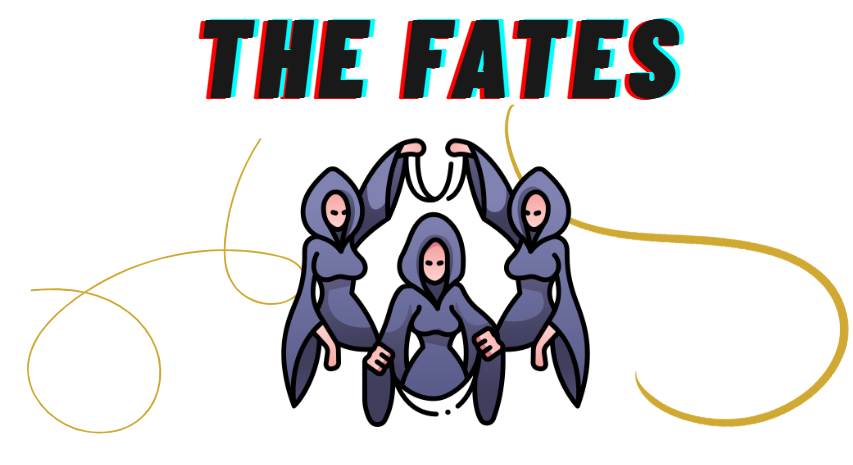
Parents: Zeus and Themis
Story: The three Fates — Clotho, Lachesis, and Atropos — controlled the destiny of every living being, including the gods themselves. Clotho spun the thread of life, Lachesis measured its length, and Atropos cut it with her shears when a life was meant to end. Not even Zeus could overrule their decisions, making them among the most powerful forces in all of Greek mythology. They were often depicted as three old women working at a spinning wheel, calmly and impartially deciding the fate of the entire world.
The Three Sisters: Clotho, the youngest, was the Spinner — she spun the thread of life on her spindle, determining the moment of every being's birth. Lachesis, the middle sister, was the Allotter — she measured the thread with her rod, deciding how long each life would last and what fortune or misfortune it would contain. Atropos, the eldest and most feared, was the Inflexible One — she cut the thread with her shears, choosing the moment and manner of death. No prayer, no sacrifice, and no amount of power could change Atropos's cut. Together, the three sisters sat at the base of the world, quietly working their loom, deciding the fate of every creature from the smallest insect to the mightiest god.
Power Over the Gods: What made the Fates truly remarkable was that even Zeus, the king of the gods, could not overrule their decisions. There are stories where Zeus wanted to save a mortal he loved — his son Sarpedon during the Trojan War — but was warned that defying the Fates would unravel the order of the universe. He wept, but he obeyed. This made the Fates arguably the most powerful beings in all of Greek mythology. They represented the ancient Greek belief that destiny is fixed, that every life has a beginning, middle, and end already determined, and that even the gods themselves are subject to a greater order.
Symbol: Spinning wheel, thread, shears.
Represents: Destiny, the inevitability of death, and the unbreakable course of life.